


I’ve been twenty something for a long time but that still doesn’t discount the significance of turning 30 tomorrow. Like many women embarking on this new decade, I have both feared and looked forward to this milestone age for a while. And despite literally everyone telling me that your thirties are infinitely more fun, rewarding, sexy, etc. than your twenties (and I believe it so!), all I’ve ever known was this decade that has given me more than I ever thought was possible. Despite my disdain of being stuck in the past, I am a cancer after all and I unfortunately suffer from an acute case of nostalgia. A deep longing for those romantic, formative years infects me with great nerve and among the multitude of things I’m currently feeling, an apprehension to let go is unfortunately one of them.
Throughout my twenties, I’ve attached myself to so many identities thrust upon me by way of a mixture of hard work, extreme stubbornness, an unrelenting commitment to autonomy, and great luck. And what’s remained, on the cusp of 30, is a premeditated yearning for what I have only known to be “the best time of my life” even though it’s the only time of my life thus far. Falling in love for the first time, experiencing gut-wrenching body-altering heartbreak, adopting intellectualism, discovering earnest self-fashioning… I’ve approached this all with much romance and sensibility and I’ve enjoyed it so much. But how foolish am I to think this was the best time of my life? The best time of your life is actually always happening. You are always peaking.
I know I’m not alone in suffering from this nostalgia. Nostalgiacore is all we ever see these days. The proliferation of 2000s aesthetics—or really just any aesthetic that isn’t current or modern—comes in the form of digi cams and low rise jeans. But nostalgia may signal something larger and perhaps more dreary: a world on the brink of economic, socio-political, ecological collapse. I also like to think that it is in part going against the conventional notion of time and projecting real capitalistic worries onto a controllable, romanticized haze. I call this the myth of nostalgia, a phenomenon that turns history into a privatized myth of my own lore. I will never be that girl again and I must remind myself that this is a good thing. How lucky am I to grow older?
For the majority of the past six months, I’d been in a sort of beautiful, funny, necessary slow-burn crash out surveying every aspect of my life in the lead up to next week. I called this time in a previous entry “the most transformative periods of my adult life thus far” (the juicy details are behind a paywall sorry) but who knows if I’ll even feel this way in a few years. The questions I’ve been confronted with repeatedly fall across a wide spectrum and I can only attribute the drama of this to the reality that being human is a brutal experience and I have fortunately been able to distract myself from it for the most part.
I recently rewatched Lone Scherfig’s film ‘An Education’. The film follows a 16-year old impressionable girl named Jenny, who lives in a drab London suburb in the 1960s. She is wise beyond her years, reads Albert Camus, and is set out to study at Oxford. But she dreams of glamor and glory. There’s more than a hint of hunger about her: Jenny wants to be someone she’s not sure she’ll ever be allowed to be, but we see, by some twinkle in her eye and curiosity in the world, that her character is deserving of some big changes. When a sly older man, David, stops her in the street to give her a ride home (predatory on all levels), she is charmed and swooned into a world of delight and rapture. David provides her of the nouveau riche life she dreamed of: fine dining in Paris, auction houses in London, an immaculate wardrobe, and chic friends. She slowly detaches from the idea of going to Oxford to instead marry David, claiming that these life experiences are far more exciting, teaching, and fulfilling than any education can provide. Only for it to come crashing down when David is revealed to be not who he claims he is.
There’s a scene in the movie that stands out to me: Jenny comes back home after a late night out at a London jazz club with David and his friends. She finds her mother doing the dishes in the kitchen and she asks if Jenny had fun. With ruthless poise, Jenny responds “best night of my life”.
I mention this film now, in relation to my own turning 30, not because of the parallels between Jenny’s plot and mine. Also, 16 and 30 are very different ages, as is 1960s London versus 2025 New York City. But I mention it because, in some round about way, my twenties were a time of intense rapture and discovery that altered my entire way of looking at the world. The dreams I had as a teenager were actualized in my twenties and every year this past decade brought on the kind of lessons and experiences I used to journal about.
I still look at life with this intense rapture that might only be possible with relative youth (I say relative because I know I know, 30 is still young) and an unrelenting determination to live my best life possible. This ethos has been the cornerstone of the way I live my life and the messaging I share on my platforms. I champion this quest for beauty and adventure and encourage others to do the same. Not in a hedonistic way but rather by combining self-awareness with complete engagement and happiness. When I look back at my twenties, all I’ve known was this rapture. And today, with all our modern grievances and the aforementioned brutality of the human experience, this rapture feels more important than ever. I must hold onto it, and I do so by often being nostalgic.
When I was going through my (mild) crash out, I asked myself questions I would never dare to ask myself in my early twenties: Do I want to get married? Do I want children? Will I ever move back to Seoul? Will I ever be okay being this far from my family? Am I creative and spiritually fulfilled? Am I setting myself up for the life I want to live when I’m older? It feels like stepping into a role that’s no longer putting curiosity and wonder at the forefront but having a little more wisdom and experience to map out what’s next.
I think I have one more great big heartbreak left in me. Perhaps a stint in Europe is imminent. I’d like to own a horse and a dog and a cat and some chickens one day. I don’t know what’s next and I don’t need to. No matter how pristine or how exacting we move through life, yearning will always knock on our door at the most random times and always at a cost.
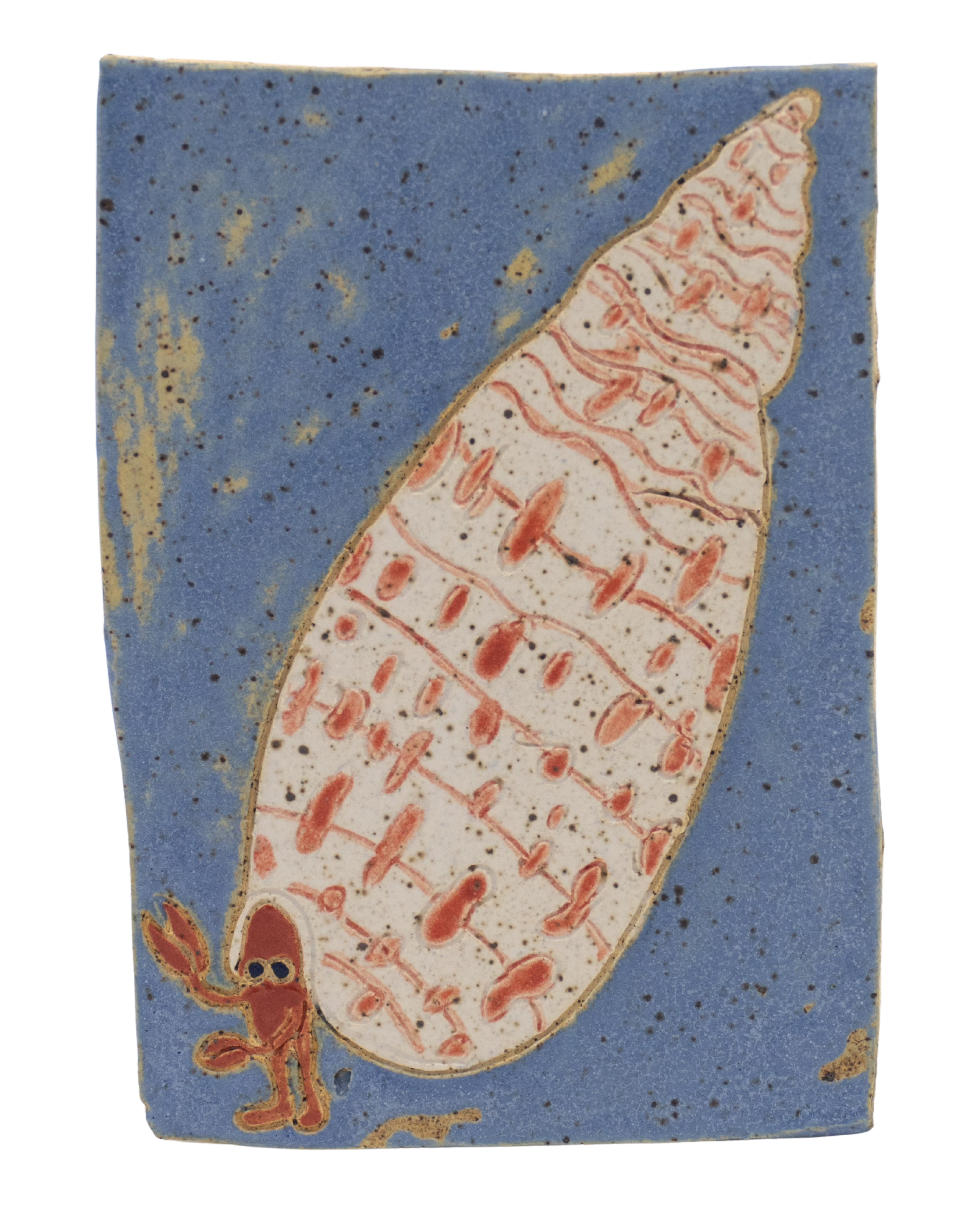
I bought a tile painting for my 30th birthday. It depicts a little crab coming out of her shell with a claw up in the air like she’s waving to the world. Her shell is like 3029320x her size and I imagine it’s her beautiful, safe, comforting home with an entire world and ecosystem within it. And despite it, the crab comes out with an enthusiasm to see what’s out there, to see what’s next. Life continues to be exciting and being delighted is a choice we get to make. I don’t have an answer for survival in this dire quest of being, only a reminder that the best night of my life has already happened but another best night of my life is coming.
I love you,
Laura
This is the best thing I’ve read in a while.
I enjoyed reading this so much as I’m currently experiencing a similar period in life. Love the appreciation of the present. I wrote my first piece today and would love it if you read it. Have a restful Sunday.